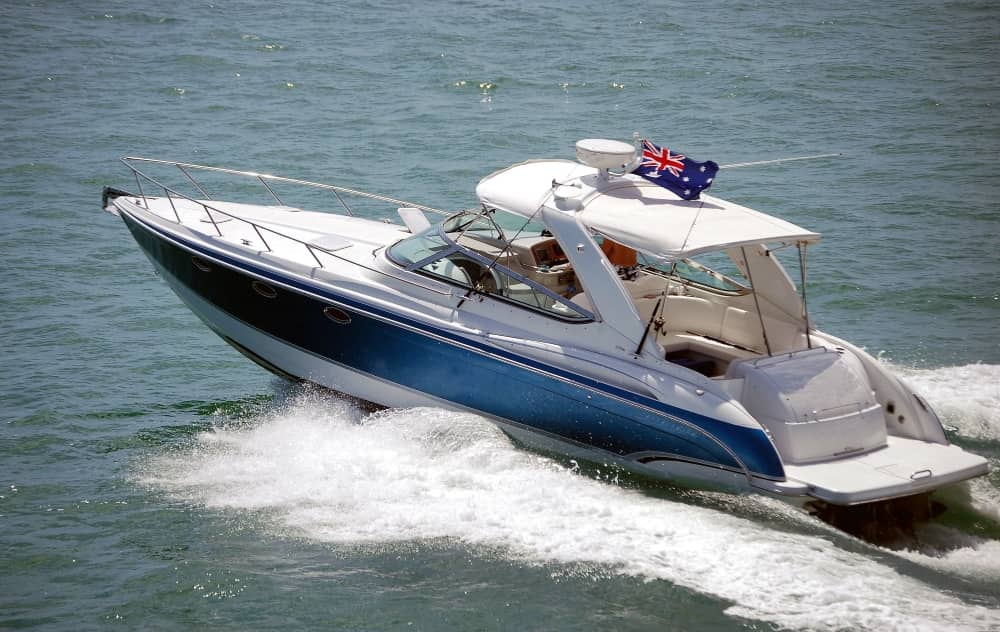
A basic tinnie in Perth will cost you anywhere from $2,000 for a bare aluminium hull to $12,000 or more once you add a trailer, outboard motor and safety gear. Used tinnie prices range between $3,000 and $10,000, while new dealership boat packages can cost between $10,000 and $25,000 or more depending on size and inclusions. But the real question isn’t just what a tinnie costs – it’s how you finance your way from that first aluminium dinghy all the way to a family cruiser without overextending yourself.
That’s what the boat ladder is about, and we’re here to walk you through every rung.
Click here to make an enquiry about a boat loan in Perth.
A Clear Path to Boat Ownership Built for WA Boaters
 If you’ve spent any time searching for your first boat in Perth, you already know the frustration. Prices swing wildly between listings. One tinnie is $2,000, another is $17,000, and it’s hard to tell why. Add financing complexity – secured vs unsecured loan options, varying interest rate ranges, comparison rate fine print – and it’s enough to make you sink the dream entirely.
We built this guide to cut through that noise. The boat ladder is a straightforward concept: start with what you can afford, build equity and experience, and move up when you’re ready. Whether you’re an Australian citizen on a steady salary or earning through Centrelink benefits, there’s a financing path that fits your financial situation.
Our role is to eliminate the guesswork. We help WA boaters understand exactly what each stage costs, what boat finance options exist at every price point, and how to structure a loan that keeps your monthly repayment manageable while you enjoy the water.
Why the Boat Ladder Approach Works
Most first-time buyers make one of two mistakes: they either buy the cheapest tinnie they can find (and spend more on repairs than the boat cost), or they stretch into a boat they can’t comfortably finance. The boat ladder avoids both.
Here’s why this progressive approach delivers better outcomes:
Start with practical pricing – A reliable first tinnie sits in the $3,000–$15,000 range. That’s an achievable loan amount for most WA buyers, even with a modest credit history.
Build equity progressively – Your first tinnie becomes a trade-in or deposit when you’re ready to upgrade. Instead of starting from zero each time, you carry forward real value.
Earn better financing terms over time – Lenders reward established ownership history and a good credit history. Your second and third loans typically come with lower interest rates and more favourable lending criteria.
Minimize financial risk – A 3-year personal loan on an $8,000 tinnie is far easier to manage than a 7-year commitment on a $90,000 cruiser you’re not sure you need yet. If your individual circumstances change, the exposure is smaller.
Develop skills before scaling investment – Learning to maintain a small outboard, handle saltwater corrosion, and manage trailer launching in WA conditions prepares you for the responsibilities of a larger vessel.
The boat ladder isn’t about settling. It’s about building toward your dream boat with each step financially justified and practically earned.
How Boat Ladder Financing Works
Getting from your first tinnie to a family cruiser doesn’t require complexity. It requires the right loan at each stage. Here’s how the progression works.
Step 1: Start with Your First Tinnie ($3,000–$15,000)
 Your entry point is a 2.4m to 4.2m aluminium tinnie – the classic fishing and leisure boat. Tinnie hull designs impact the pricing based on size and functionality: flat-bottom hulls for calm estuaries cost less than deep-V hulls built for choppier conditions. Hulls between 3m to 3.5m are less expensive compared to larger models, making them ideal starters.
Tinnie prices in Perth vary dramatically based on age and condition. A brand-new 3.7m aluminium car topper without a motor can start around $1,999. A new Stacer 379 Seasprite hull lists at roughly $4,054 without motor or trailer. Once you factor in a small outboard ($1,500–$5,000 depending on model), a galvanised trailer ($1,700–$2,000 new), safety gear, and registration, a complete package typically lands between $5,000 and $12,000.
Buying from private sellers can be more economical than purchasing from dealers, with used tinnies including motor and trailer frequently available in the $4,000–$8,000 range. Financing used boats is still possible, but older packages often face stricter lender criteria than newer near-new setups, especially where age, condition, or missing service history increases risk. The condition of the trailer impacts the value of a tinnie significantly, so always inspect both the hull and the trailer before committing.
Accessories like fish finders and bimini tops drive up the price of tinnies, while electronics and add-ons enhance the value of second-hand tinnies when it comes time to resell. Factor these into your budget from the start.
At this stage, financing typically means a personal loan of $5,000–$15,000. Loan terms of 1 to 3 years work best for smaller boats – short enough to manage depreciation risk and keep total interest costs down. A personal loan for a boat can have a fixed or variable interest rate; for a first tinnie, a fixed rate gives you predictable repayments.
Example financing breakdown: For a $12,000 tinnie package financed via a secured boat loan over 3 years at approximately 9% p.a., your monthly repayment lands around $380–$390. Total repayments come to roughly $13,700–$14,000, meaning you’ll pay approximately $1,700–$2,000 in interest and fees over the life of the loan. An unsecured personal loan at 12–15% would push that cost significantly higher.
Step 2: Upgrade to Enhanced Tinnie or Small Cabin Boat ($15,000–$45,000)
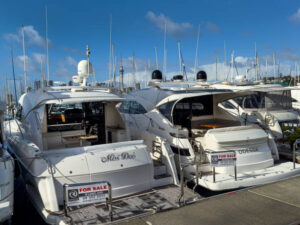 After a couple of years on the water, you’ll know what you need. Maybe it’s a larger hull with a 40–60hp outboard. Maybe it’s an enclosed console or a small cabin for overnight trips. This is where the boat ladder pays off.
Your first tinnie – kept in good condition – serves as a trade-in or deposit toward your next boat. A tinnie bought for $7,000 might retain $3,000–$5,000 in trade value after two years, reducing the loan amount you need for the upgrade. Lenders may accept trade-in value as part of your deposit.
At this stage, a boat loan of $15,000–$45,000 over 3 to 5 years is standard. Repayment terms for boat loans range from 1 to 7 years, and at this level, the 3–5 year window balances manageable repayments against depreciation. You’ll often access competitive rates because you now have boat ownership history and a track record of loan repayment.
Boat loans can be secured or unsecured. A secured loan – where the boat acts as collateral – delivers lower interest rates. Unsecured boat loans don’t require collateral but carry higher rates, often suitable only if your credit score is strong.
Example: For a $30,000 boat loan over 4 years at 9–12% p.a., expect monthly repayments of approximately $700–$900. The actual rate will vary depending on your credit report, income verification, and whether you’re offering the boat as security.
Step 3: Move to Family Cruiser ($45,000–$150,000+)
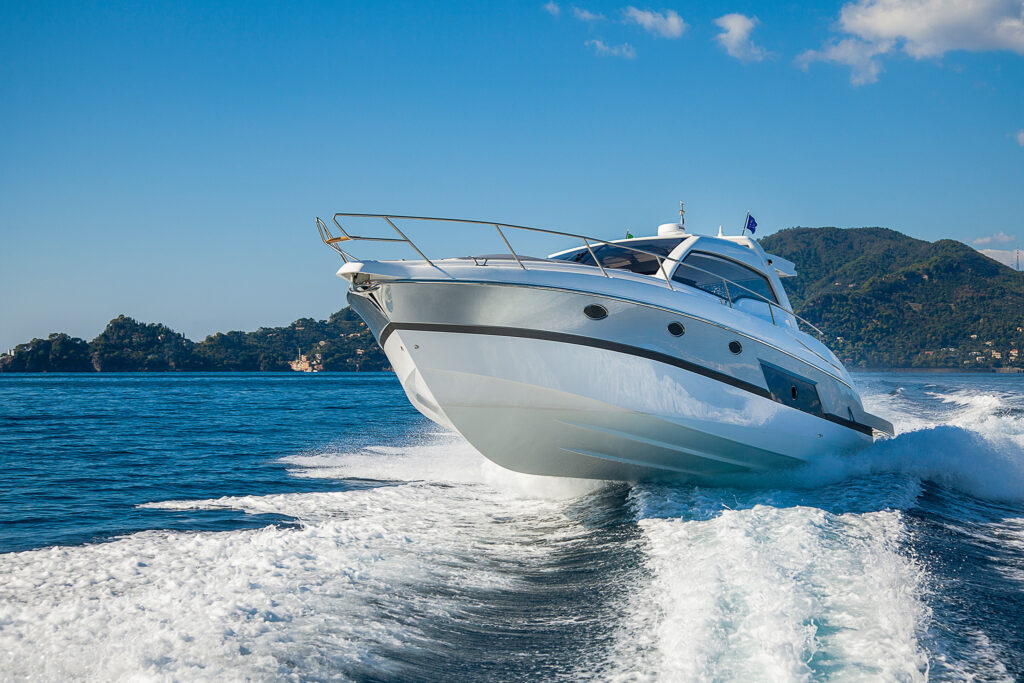
 This is the top of the ladder for most recreational boaters in WA. A 5m+ cabin cruiser with full amenities, larger outboards or inboard motors, sleeping quarters, and advanced electronics. These vessels support overnight trips, extended family outings, and serious offshore capability.
By now, you’ve accumulated meaningful equity. You’ve demonstrated reliable boat ownership and consistent loan repayments. Lenders treat you differently – with access to larger loan amounts, longer terms, and often a lower minimum interest rate.
Marine finance at this level typically runs $45,000–$150,000+ over 5 to 7 years. For an $80,000 boat financed over 6 years, monthly repayments might sit between $1,300 and $2,000 depending on your interest rate, deposit, and whether you’ve chosen a fixed interest rate or variable rate loan.
Total repayment for a $20,000 loan is $25,551 – that gives you a sense of how interest compounds even on moderate amounts. Scale that up to $80,000+ and the difference between a well-negotiated secured rate and an unsecured personal loan becomes tens of thousands of dollars over the loan term. This is where working with a broker who can access personalised rates across a broad lender panel becomes critical.
What Makes Our WA Boat Loan Financing Different
Most lenders offer a single product. We offer options.
Panel of 40+ lenders – We don’t work for one bank. We search across more than 40 lenders to match your boat finance to your actual financial situation, whether you’re buying a new or used boat.
Fast approvals built for boat buying – Tinnie deals move fast, especially private sales. Our crew often deliver approvals within one hour. Funds can be available within one business day, so you can access funds and secure the boat before someone else does.
Non-traditional income accepted – We work with lenders who accept Centrelink payments, self-employment income, seasonal earnings, and other non-standard sources. If you can demonstrate your income through months business bank statements, we can find lending options.
WA-specific expertise – Our crew understand Perth’s boating conditions. Saltwater corrosion, trailer launching at WA ramps, and seasonal maintenance cycles all affect boat value and financing suitability. We factor these into our recommendations.
Transparent cost breakdowns – We show you the comparison rate, not just the headline rate. We break down the establishment fee, monthly fees, ongoing fees, and any exit fees or early repayment fees so you know the true cost before signing, and note where some lenders apply fees or conditions around additional payments.
Flexible repayment structures – Choose weekly, fortnightly, or monthly repayment schedules. Many of our lender options allow extra repayments and some offer a redraw facility, giving you flexibility to pay down your loan sooner if your situation improves. No early repayment fees for some personal loans, and no penalties for early repayments on ANZ Variable Rate Loans specifically.
Real WA Boat Ladder Success Stories
The boat ladder isn’t theoretical. Here’s what the progression actually looks like for WA buyers.
The Perth Family Journey: A young family starts with an $8,000 used 3.7m tinnie and trailer, financed with a $7,000 personal loan over 2 years. Monthly repayments of around $320 are comfortable alongside their regular monthly expenses. After three years, they sell the tinnie for $4,500 and use it as a deposit on a $35,000 centre console with cabin, financing $30,500 over 4 years. Two years later, with equity in the centre console and a strong repayment record, they move to a $65,000 family cruiser financed over 6 years with competitive rates. Total time from first tinnie to family cruiser: five years.
The Solo Angler: An avid fisherman picks up a bare 3.5m aluminium hull for $2,500 and spends another $3,000 on a used outboard and basic trailer. He finances $5,000 over 18 months with a secured loan. After building experience and understanding what he needs for offshore fishing in WA waters, he upgrades to a specialised 4.5m fishing tinnie with sounder, GPS, and live bait tank for $22,000. His trade-in covers $3,000 of the deposit, and his improved credit history unlocks better rates on the new loan.
Typical equity growth and financing improvements:
Stage | Purchase Price | Trade-In Value (2-3 yrs) | Equity Carried Forward | Typical Rate Improvement |
|---|---|---|---|---|
Basic Tinnie | $5,000–$12,000 | $2,500–$5,000 | $2,500–$5,000 | Baseline |
Enhanced Tinnie | $15,000–$45,000 | $8,000–$25,000 | $8,000–$25,000 | 1–2% lower |
Family Cruiser | $45,000–$150,000+ | Varies widely | Significant | Best available rates |
Who the Boat Ladder Approach Is For
The boat ladder suits a wide range of WA boaters:
First-time buyers wanting to start with a reliable tinnie in the $5,000–$12,000 range without overcommitting financially.
Existing tinnie owners ready to step up to a cabin boat or larger vessel, using their current boat as trade equity and their repayment history to unlock better loan terms.
Families planning ahead who want to progress toward full cruising capabilities over 3–5 years rather than taking on a massive loan today. You want a boat or jet ski that fits your life now, with a clear path to something bigger later.
Budget-conscious boaters who want to minimize financial risk while maximizing time on the water. Starting small means lower current repayment obligations and less stress if your circumstances change.
If you want to get on the water now and work toward your dream boat strategically, this approach was designed for you.
Start Your Boat Ladder Journey Today
Every family cruiser journey starts with a tinnie. The boat ladder approach means you don’t need to wait until you can afford the perfect vessel – you start now, build experience and equity, and upgrade when the timing and financing are right.
 Here’s how to get moving:
Apply online – Our simple application captures some information about you and the boat you’re looking at.
Get pre-approved fast – Our crew search across 40+ lenders to find the right loan for your stage of the ladder. Pre-approval tells you exactly how much you can spend before you start shopping – whether you’re after a tinnie, a jet ski, or a cabin cruiser.
Buy your boat with confidence – With approved loan funds ready, you can negotiate from a position of strength. Whether it’s a private sale, dealer purchase, or a zip pay arrangement, you know your budget and your repayments.
No long-term obligation. No hidden ongoing fees. Just clear information about your boat finance options tailored to your financial situation and where you sit on the boat ladder.
We’re a Perth-based brokerage with deep knowledge of WA boating conditions and the lending landscape. We understand that every buyer’s circumstances are different, and we structure financing to match – not the other way around.
Ready to find out what you can afford? Click ‘Apply Now’ for a free, no-obligation consultation. We’ll map out your boat ladder, run the numbers, and show you exactly what your weekly, fortnightly, or monthly repayments would look like at every stage.
Your first tinnie is closer than you think.
Frequently Asked Questions
How much does a basic tinnie actually cost in Perth?
A bare aluminium hull (3–3.7m) starts from around $2,000–$4,000. Add a small outboard motor ($1,500–$5,000), trailer ($1,700–$2,000), safety gear, and registration, and a complete entry-level package typically runs $5,000–$12,000. Used tinnie prices range between $3,000 and $10,000 for complete setups in reasonable condition.
What’s the minimum deposit needed for tinnie financing?
It depends on the lender and your credit history. Some lenders offer 100% financing on newer boats in good condition. Others require 10–20% deposit. A stronger credit report and verifiable Australian taxable income improve your chances of lower or zero deposit requirements. You may also be asked for a verifiable residential address and personal details to complete your application.
Can I use my current boat as a trade-in for upgrading?
Yes. Most dealers accept trade-ins, and the equity in your current boat can serve as your deposit on the next purchase. Even private sale proceeds can be applied as a deposit when financing through a broker. This is one of the core advantages of the boat ladder approach.
How long should I wait between boat ladder upgrades?
There’s no fixed rule, but 2–3 years at each stage is typical. This gives you time to build equity, establish a repayment track record, and genuinely understand what you need from your next boat. Rushing upgrades risks negative equity – owing more than the boat is worth.
Do I need boat insurance for financing approval?
Most lenders require comprehensive insurance on financed boats, particularly for secured loans. This protects both you and the lender. Insurance costs vary but should be factored into your budget alongside phone bills, instalment purchases, and other regular monthly expenses when assessing affordability.
Are there fees I should watch out for?
Yes. Look beyond the headline interest rate. Check for an establishment fee (typically $150–$500), monthly fees, PPSR registration costs, and any exit fees or early repayment fees. Some loans charge no early repayment fees, while others penalise you for paying ahead of schedule. We always present the full comparison rate and all fees and charges before you commit. If you use online banking or e contract acceptance, the process is typically faster and may qualify for fee waivers with certain lenders.